The Challenge
A mid-sized logistics company specialising in e-commerce fulfilment had outgrown their existing warehouse near Port Klang. With over 50 full-time staff and a daily throughput of 500+ parcels across three major e-commerce platforms, the operation was bursting at the seams. Goods were stacked in aisles, the picking error rate had climbed to 4.2%, and the operations manager estimated they were losing 15–20% efficiency due to space constraints alone.
The company needed an additional 15,000 sqft of warehouse space — ideally within 10 minutes of their current location to keep the team together and maintain the relationship with their existing haulage contractors serving Westport and Northport.
They started where most businesses start: online property portals. Within 48 hours of posting an inquiry on three major portals, the operations manager received over 15 calls from different agents. The experience was a masterclass in frustration:
- 5 agents showed the same warehouse on Jalan Kapar at three different asking rents (RM4.50, RM4.80, and RM5.20 per sqft)
- 2 listings turned out to be unavailable — one had been leased three months prior, the other was under renovation with no confirmed completion date
- 1 listing had photos from a completely different warehouse in Bukit Raja
- 3 agents pushed units in Pulau Indah — a 35-minute drive from the existing facility, defeating the purpose of keeping operations consolidated
- Zero agents asked about operational requirements: ceiling height, floor load capacity, electrical supply, or loading bay configuration
After two weeks, the operations manager had visited four properties (two of which were unsuitable on arrival), spent an estimated 12 hours on calls, and was no closer to finding the right warehouse.
Klang Warehouse Market Context
Klang is not a single warehouse market — it is a collection of distinct sub-areas, each with different pricing, vacancy profiles, and operational characteristics. Understanding these differences is critical for logistics operators who need the right infrastructure, not just the cheapest rent.
| Sub-Area | Avg. Rent (RM/sqft/month) | Vacancy | Pros | Cons |
|---|---|---|---|---|
| Bukit Raja | RM5.50–7.50 | Low (3–5%) | Modern stock, premium specs, MNC neighbours | Highest rent in Klang, limited availability |
| Pulau Indah / PKFZ | RM4.50–6.50 | Moderate (8–12%) | Port-adjacent, free zone benefits, large units | Island access bottleneck, 35+ min from North Klang |
| Kapar / North Klang | RM3.80–5.00 | Moderate (10–15%) | Affordable, large units, WCE access improving | Older stock mixed with new, flood pockets |
| Bandar Sultan Suleiman | RM4.50–6.00 | Low (4–6%) | Closest to Northport, 24/7 operations accepted | Congested during port peak hours, aging stock |
| Meru | RM4.00–5.50 | Moderate (8–10%) | Mid-range pricing, Shah Alam border access | Mixed industrial character, some narrow roads |
| Telok Gong | RM3.50–4.50 | High (15–20%) | Cheapest in Klang, heavy industrial accepted | Gritty environment, limited modern stock |
| Pandamaran | RM3.50–4.50 | Moderate (10–12%) | KESAS access, close to port | Aging 1980s–2000s stock, leasehold dominant |
For this client, Kapar emerged as the smart choice over the more obvious alternatives:
- vs Bukit Raja: RM1.50–2.50/sqft/month cheaper, with adequate specifications for e-commerce fulfilment. The client did not need premium MNC-grade facilities — they needed functional warehouse space with good racking height and loading access.
- vs Pulau Indah: 25 minutes closer to the existing facility. The island access constraint would have added 60–70 minutes of daily commute time for the operations manager supervising both sites.
- vs Bandar Sultan Suleiman: Better availability of 15,000 sqft units. Sultan Suleiman's low vacancy meant limited options and landlords with less flexible lease terms.
Kapar also benefits from the new WCE Section 2 interchange (opened January 2025), which cut travel time to the KESAS corridor by approximately 10 minutes — a meaningful improvement for a logistics operation running 12-hour shifts.
Our Search Process
When the operations manager reached out to IndustrialKL, we assigned one dedicated advisor to handle the entire search. No agent swapping, no surprise calls from strangers.
Our advisor started by understanding the real requirements — not just the size, but the operation. What kind of goods? How heavy? Do you need dock levellers or ground-level loading? What electrical capacity? These are the questions property portals never ask.
Requirements Specification
| Requirement | Specification | Why It Matters |
|---|---|---|
| Usable floor area | 14,000–18,000 sqft | Current overflow + 18-month growth projection |
| Ceiling height | Minimum 8 metres (26 ft) clear | 4-tier pallet racking for e-commerce SKU storage |
| Floor load capacity | Minimum 20 kN/m² | Loaded pallet racking with narrow-aisle forklifts |
| Loading bays | Minimum 2 dock-level + 1 ground-level | Simultaneous inbound/outbound operations; ground-level for van fleet |
| Power supply | Minimum 100A three-phase | Conveyor system, sorting equipment, LED lighting, office AC |
| Column spacing | Minimum 9m x 9m grid | Forklift manoeuvrability between racking rows |
| Drive-in access | 5-tonne truck clearance | Daily haulage from port to warehouse |
| Security | Gated compound or managed park | High-value e-commerce goods requiring CCTV and access control |
| Budget | RM4.00–5.50/sqft/month all-in | RM56,000–82,500/month for 15,000 sqft |
| Location | Within 15 min of existing facility | Staff retention and operational continuity |
Using our network of over 100 agents across Greater KL, our advisor identified seven potential warehouses within the target radius. After filtering for power supply, floor load capacity, ceiling height, and column spacing, three were shortlisted for viewing.
The filtering process eliminated four options:
- Unit A (Meru): Ceiling height only 6m — insufficient for 4-tier racking
- Unit B (Jalan Kapar): Single loading bay — would create bottlenecks during peak hours
- Unit C (Kapar Bestari): 60A power supply — inadequate for conveyor system
- Unit D (Sungai Kapar Indah): Located in a flood-risk pocket near Sungai Kapar — unacceptable for e-commerce inventory storage
Property Comparison
The three shortlisted warehouses were presented with a structured comparison:
| Feature | Option 1: Kapar (Selected) | Option 2: Meru Industrial Park | Option 3: K International |
|---|---|---|---|
| Floor area | 16,200 sqft | 14,800 sqft | 17,500 sqft |
| Ceiling height | 9.5m (31 ft) | 8.2m (27 ft) | 8.8m (29 ft) |
| Floor load | 25 kN/m² | 20 kN/m² | 22 kN/m² |
| Loading bays | 2 dock + 1 ground | 2 dock + 1 ground | 3 dock, no ground-level |
| Power supply | 200A three-phase | 150A three-phase | 100A three-phase |
| Column spacing | 10m x 12m | 9m x 9m | 9m x 10m |
| Asking rent | RM4.20/sqft/month | RM4.80/sqft/month | RM4.50/sqft/month |
| Monthly rent | RM68,040 | RM71,040 | RM78,750 |
| Security | Gated compound, 24hr guard | Managed park, CCTV | Standalone, perimeter fencing |
| Drive time to existing facility | 8 minutes | 14 minutes | 11 minutes |
| Existing fit-out | Full pallet racking system in place | Bare shell | Partial shelving (not suitable) |
| Lease terms | 2+1 years, 5% escalation | 3+2 years, 8% escalation | 2+1 years, 7% escalation |
| Landlord flexibility | Willing to negotiate deposit structure | Standard 2+1 deposit | Firm on terms |
| Pros | Racking saves RM200K+; best ceiling height; closest to existing site; excess power for future | Managed park amenities; good spec | Largest floor area; reasonable rent |
| Cons | Older building exterior (functional interior) | Higher rent; tighter column spacing | No ground-level bay for vans; standalone security concern |
The Result
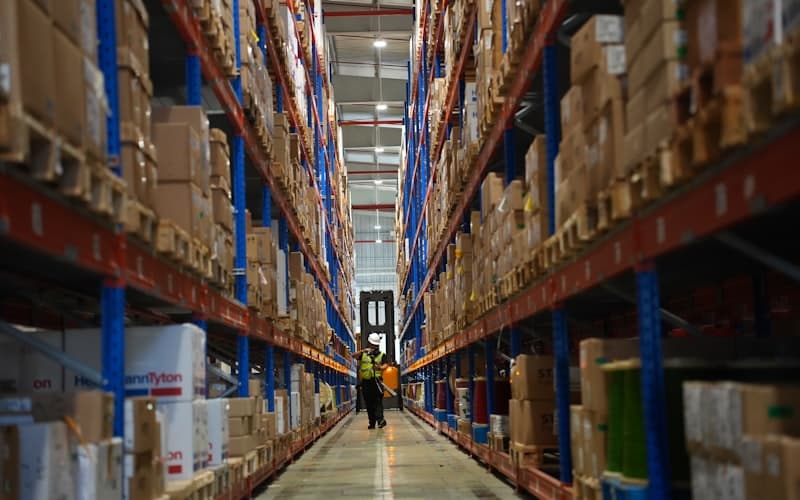
The winning option was the warehouse in Kapar, just 8 minutes from the existing facility. What made it exceptional: the previous tenant — a cold chain distribution company — had installed a full pallet racking system rated to 2,000 kg per pallet position and left it in place upon lease expiry. For the logistics company, this represented an immediate and substantial saving.
RM200K Racking Savings Breakdown
| Item | Cost If New (RM) | Cost with Existing Racking (RM) | Saving (RM) |
|---|---|---|---|
| Selective pallet racking (4-tier, 320 pallet positions) | 128,000 | 0 (in situ) | 128,000 |
| Installation and anchoring | 22,000 | 0 | 22,000 |
| Rack safety inspections and certification | 4,500 | 4,500 (re-certification only) | 0 |
| Wire mesh decking (160 bays) | 19,200 | 0 (in situ) | 19,200 |
| Aisle marking and floor striping | 8,500 | 3,500 (refresh only) | 5,000 |
| Downtime during installation (est. 3 weeks lost productivity) | 28,000 | 0 | 28,000 |
| Total | RM210,200 | RM8,000 | RM202,200 |
Total Move-In Cost Comparison
| Cost Item | Option 1: Kapar (Selected) | Option 2: Meru | Option 3: K International |
|---|---|---|---|
| Security deposit (2 months) | RM136,080 | RM142,080 | RM157,500 |
| Utility deposit | RM8,000 | RM8,000 | RM8,000 |
| Advance rent (1 month) | RM68,040 | RM71,040 | RM78,750 |
| Racking and fit-out | RM8,000 | RM210,200 | RM195,000 |
| Moving costs | RM15,000 | RM18,000 | RM16,500 |
| IT and comms setup | RM12,000 | RM12,000 | RM12,000 |
| Total move-in cost | RM247,120 | RM461,320 | RM467,750 |
| Effective first-year cost | RM1,063,600 | RM1,313,800 | RM1,412,750 |
Effective Rent Advantage
When the racking savings are amortised over the initial 2-year lease term, the effective rent drops significantly:
| Metric | Option 1: Kapar | Market Benchmark (Kapar avg.) |
|---|---|---|
| Headline rent | RM4.20/sqft/month | RM4.40/sqft/month |
| Racking saving amortised over 24 months | -RM0.52/sqft/month | N/A |
| Effective rent | RM3.68/sqft/month | RM4.40/sqft/month |
| Effective discount vs market | 16.4% | — |
Before and After: Operations Comparison
| Metric | Before (Old Warehouse) | After (Kapar Warehouse) | Change |
|---|---|---|---|
| Usable floor area | 10,800 sqft (effective, after aisle congestion) | 16,200 sqft | +50% |
| Pallet positions | 180 (floor stacking + partial racking) | 320 (4-tier racking) | +78% |
| Daily parcel throughput | 500–550 | 700–750 | +40% |
| Picking error rate | 4.2% | 1.8% | -57% |
| Staff per shift | 28 (crowded, inefficient movement) | 26 (better layout, less wasted motion) | -7% (2 staff redeployed) |
| Dock utilisation | 1 bay, sequential loading | 3 bays, simultaneous operations | 3x capacity |
| Average order fulfilment time | 4.2 hours | 2.8 hours | -33% |
| Monthly rental cost | RM48,600 | RM68,040 | +40% (but 50% more space) |
| Cost per parcel processed | RM3.24 | RM3.03 | -6.5% |
The lease was signed within three weeks of the initial inquiry. The company moved in with minimal downtime — the existing racking meant no installation period — and the operations team was back to full capacity within four days.
Client Perspective
"We wasted two weeks dealing with portal agents who didn't understand logistics. One conversation with IndustrialKL, and they found us something we didn't even know was available. The racking alone saved us months of setup time. Our throughput is up 40%, picking errors are down by more than half, and we're processing each parcel at a lower cost even though the rent is higher. That's the difference between finding a cheap unit and finding the right unit."
— Operations Manager, Klang-based logistics firm
Key Takeaway
This case illustrates a principle that applies to every industrial property search: the cheapest rent is rarely the cheapest option.
For logistics operators, the real cost of a warehouse is not the headline rental — it is the total cost of occupancy including fit-out, infrastructure, downtime, and operational efficiency. A unit with existing racking, the right ceiling height, and proper loading bay configuration can save hundreds of thousands of ringgit compared to a bare-shell unit at a lower per-sqft rate.
Portal-based searches optimise for rent. Advisory-based searches optimise for total cost and operational fit. In industrial property, that distinction can be worth six figures.